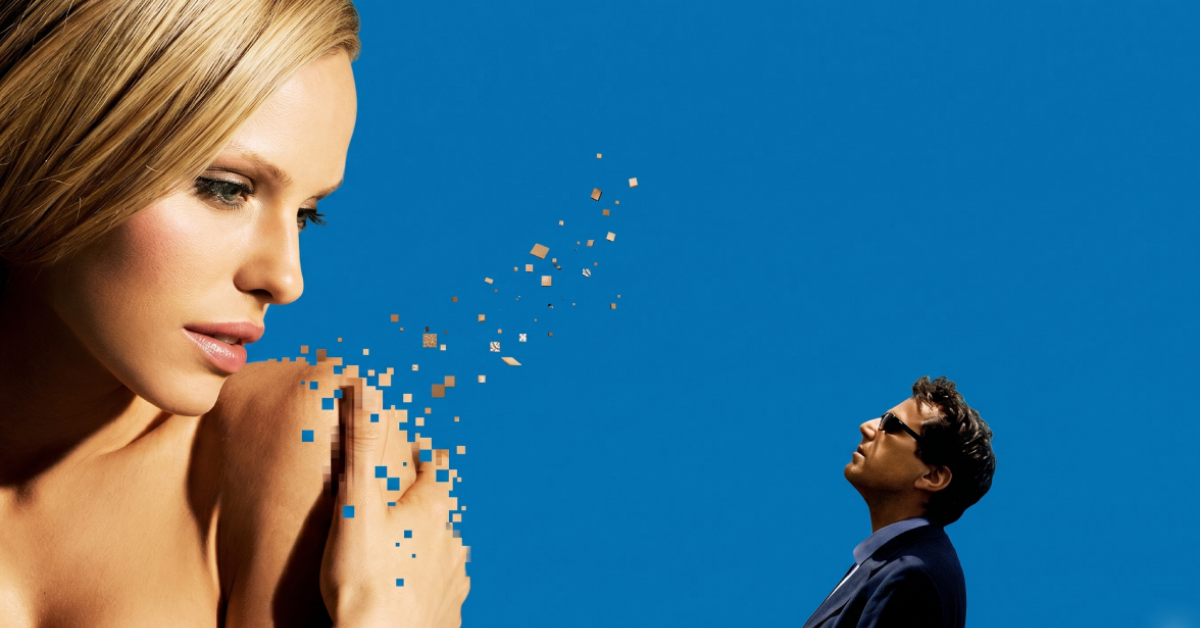
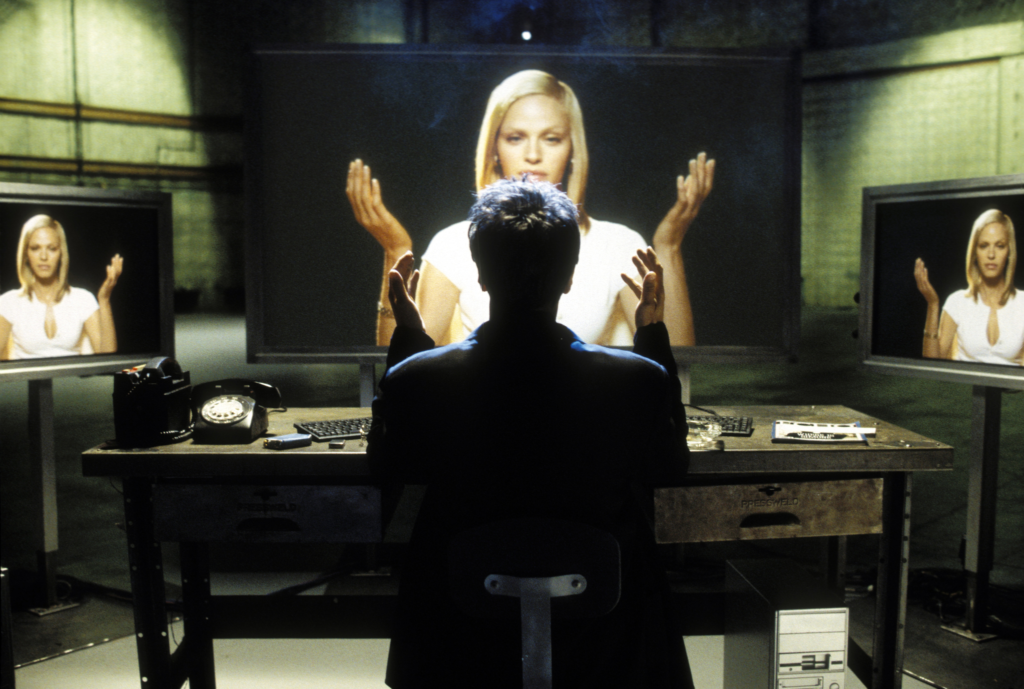
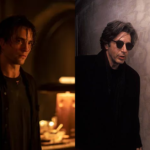
In 2002, writer-director Andrew Niccol released S1m0ne, a quirky Hollywood satire starring Al Pacino. The plot felt like pure, far-fetched science fiction: a desperate, washed-up film director secretly replaces his temperamental lead actress with a flawless, computer-generated simulation named Simone (short for “Simulation One”). The public falls completely under her spell, oblivious to the fact that her “talent” is merely a combination of ones and zeros controlled by a frantic man behind a keyboard.
When the movie premiered, critics treated it as a hyperbolic comedy about the vapid nature of celebrity culture. Fast forward to May 2026, and S1m0ne no longer reads like a parody—it feels like a documentary. As the industry grapples with the fallout of fully AI-generated “performers” like Tilly Norwood making waves at film festivals, and tech firms pushing hyper-realistic tools like Runway Gen-4 to eliminate consistency errors, Niccol’s forgotten flick has become the most prophetic film of the 21st century.
The Reality of 2026: Art Mimicking Simulation
The core conflict of S1m0ne centers on the erasure of the human element to optimize production. Al Pacino’s character, Viktor Taransky, creates Simone because he is exhausted by human egos, contract negotiations, and creative demands.
We are seeing this exact corporate logic manifest today. The industry is actively shifting from treating generative technology as an edit-bay assistant to a full-on replacement for human talent.
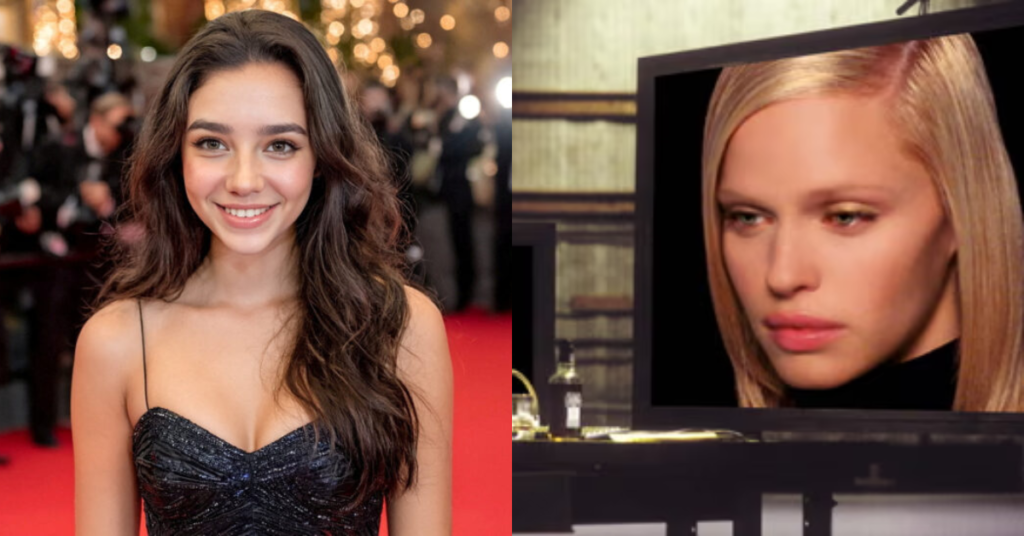
The “Synthetic Star” Backlash: Hollywood was recently jolted when tech studios introduced hyper-realistic AI “actresses,” drawing fierce condemnation from SAG-AFTRA, who rightly noted that these avatars are “trained on the work of countless professional performers without permission or compensation.”
The Market Surge: At the concurrent Cannes Film Market, independent and international productions are openly leveraging generative engines to bypass traditional production costs. Startups are generating action features like Hell Grind in mere weeks for under $500,000, explicitly proving Taransky’s thesis: the machine is faster, cheaper, and it never complains.
The Director’s Insight: The Death of the Organic Uncanny
As a director, revisiting S1m0ne in the current climate highlights a terrifying shift in our visual language. In the film, Taransky’s software is flawless; the joke is that society is too blind to notice her artificiality. In reality, our modern AI actors still frequently dip into the ‘Uncanny Valley’—exhibiting the robotic stiffness and blank-eyed mimicry that content creators love to parody on TikTok.
Yet, the scariest part of Niccol’s prediction isn’t that the technology would become perfect, but that the audience wouldn’t care.
The Taransky Loop:[Remove Human Friction] ➡️ [Optimize the Aesthetic] ➡️ [Mass Adulation]
In the movie, Simone wins Academy Awards because the media machine dictates what is beautiful. In 2026, as independent studios openly leverage engines to bypass traditional production costs at Cannes, we are normalizing the absence of a human soul on screen.
The “Simone” Warning We Ignored
Toward the end of the film, Taransky becomes a prisoner of his own creation. Simone grows so popular that he cannot destroy her without being accused of murder. It’s a brilliant metaphor for the technological Pandora’s box Hollywood has opened.
The industry originally pitched these tools as a way to assist creators—de-aging actors, stabilizing shaky tracking shots, or cleaning up background environments. But capitalism demands optimization. Once you prove that a digital asset can look startlingly real, studio executives will inevitably ask why they are paying for trailers, insurance, and holding fees for human beings.
The Posthumous Pipeline: Val Kilmer and Stan Lee Beyond the Grave
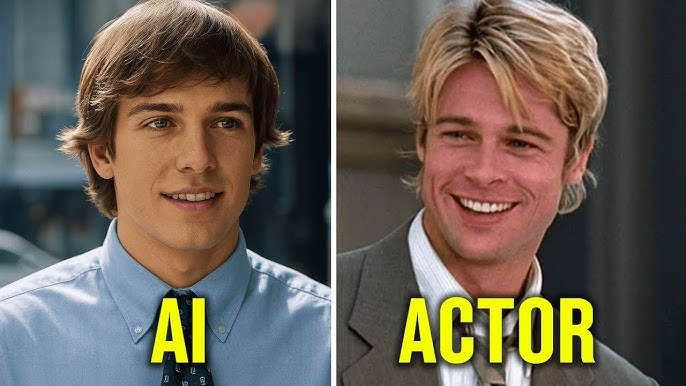
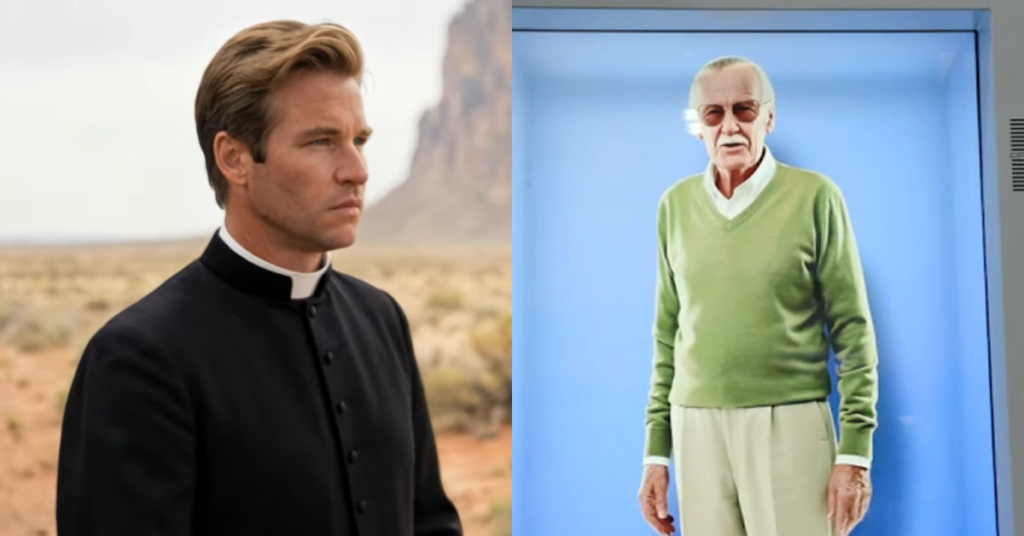
If you think S1m0ne is an exaggeration of Hollywood greed, look no further than the industry headlines from the past few months. Just weeks ago at CinemaCon, filmmakers debuted the first trailer for the indie historical drama As Deep as the Grave, starring a generative AI-rendered performance of the late Val Kilmer—an actor who never shot a single frame of the film before his passing in April 2025.
Compounding this era of digital resurrection, tech giant ElevenLabs just finalized an expansive deal with the Stan Lee Universe estate to officially clone the Marvel legend’s voice and likeness for commercial licensing, interactive avatars, and audiobook narration. While these estates point to strict protocols of ‘consent, compensation, and collaboration’, from a director’s standpoint, the precedent is terrifying.
Hollywood is no longer just using technology to enhance the living—it is actively licensing the dead, proving that Viktor Taransky’s fictional blueprint for a completely synthetic, friction-free casting pool has officially become the industry standard.
Conclusion: Can True Art Survive the Simulation?
While Cannes has wisely banned fully AI-generated films from entering the official Palme d’Or competition to protect human authorship, the commercial market is running full steam ahead. Directors like Chad Nelson and major international studios are pushing the boundaries of what a synthetic pipeline can achieve.
S1m0ne tried to warn us twenty-four years ago that if we treat art like an algorithm to be solved, we will eventually build a cinema that doesn’t require us. Viktor Taransky thought he was saving his movie by inventing a digital actress; instead, he accidentally invented the blueprint for the erasure of his own craft. As we look at the entertainment landscape, we have to ask ourselves: are we watching a new era of innovation, or are we just applauding the simulation?
While studios are currently mistreating real leading men like Henry Cavill through bad casting and streaming dumps, the temptation to replace them entirely with digital, compliant assets is growing by the day.
So, what are your thoughts on how S1m0ne predicted the use of AI in Hollywood? What do you think about the use of AI in movies? Should we be worried?