Long before Facebook, Instagram, TikTok, or the concept of “influencers” existed, The Truman Show (1998) had already predicted our future. What seemed like a clever satire about reality TV ended up becoming a prophetic look at a world where people voluntarily broadcast their lives — and millions obsessively watch.
Directed by Peter Weir and starring a remarkable, dramatic-turn Jim Carrey, the film has evolved from a quirky concept into a powerful cautionary tale that feels more relevant now than ever.
A Revolutionary Premise
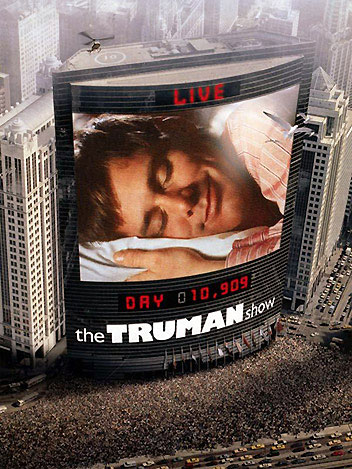
The Truman Show follows Truman Burbank (Carrey), a man living what appears to be an ordinary suburban life… except he’s the unwitting star of the biggest TV show on Earth. Since birth, Truman has been filmed 24/7 inside a massive dome, with actors playing his friends, coworkers, and even his wife. His “life” is just a script controlled by a TV corporation and its god-like creator, Christof (Ed Harris).
As Truman begins noticing odd glitches — artificial weather, repeated background actors, staged accidents — he starts questioning the nature of his world. The more he senses something is wrong, the more desperately the show attempts to keep him contained.
The idea is simple, but the implications are enormous: What is a person’s life worth when the world consumes it as entertainment? And what happens when that person discovers the truth?
A Film Ahead of Its Time
When it was released, The Truman Show seemed like a commentary on the rise of reality TV. But nearly 30 years later, it feels downright prophetic.
Today:
Millions watch influencers broadcast every detail of their lives
People perform for cameras daily
Privacy is almost nonexistent
Algorithms monitor everything we do
And audiences consume strangers’ lives as entertainment
Truman Burbank walked so TikTok and Instagram could run.
The film’s themes — surveillance, identity, manufactured realities, curated images, and the loss of privacy — have aged with eerie accuracy. Instead of one man trapped in a dome, we now have billions voluntarily living in digital glass houses.
The Visual Language of a Human Zoo
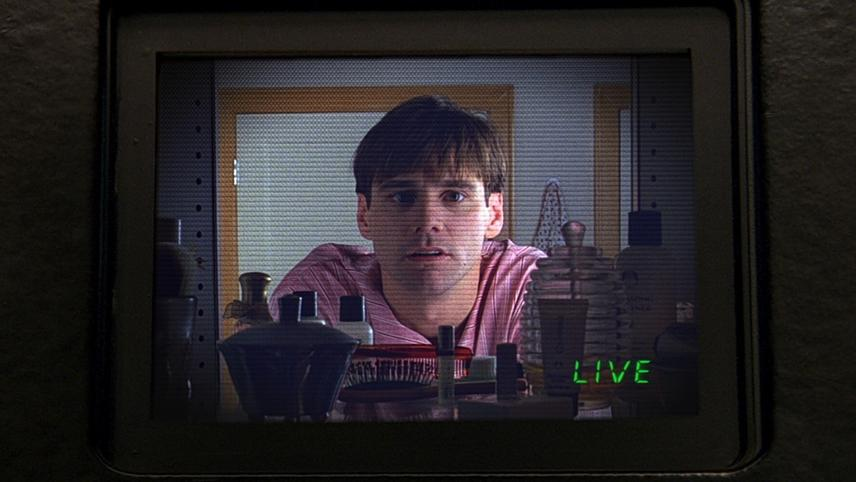
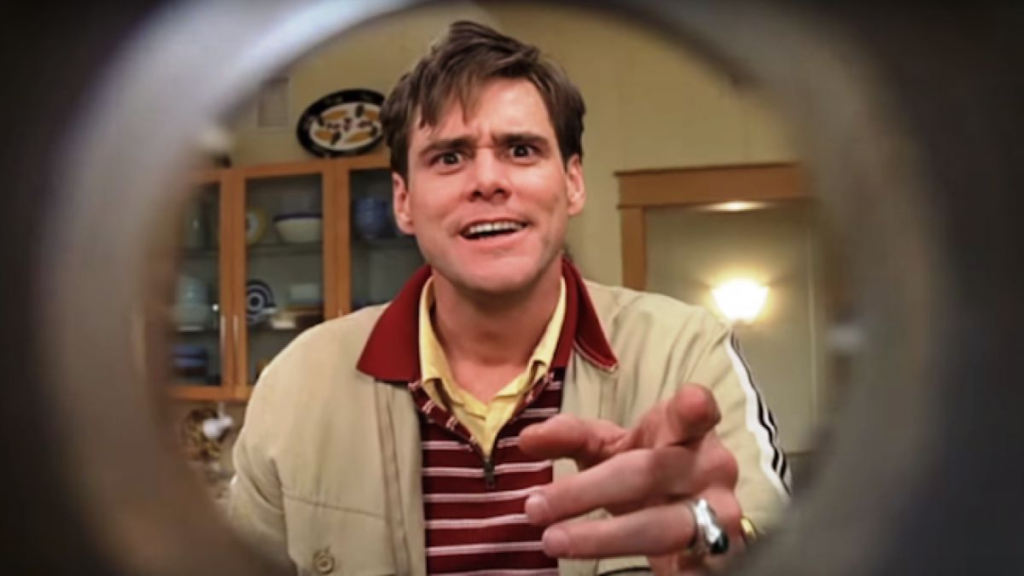
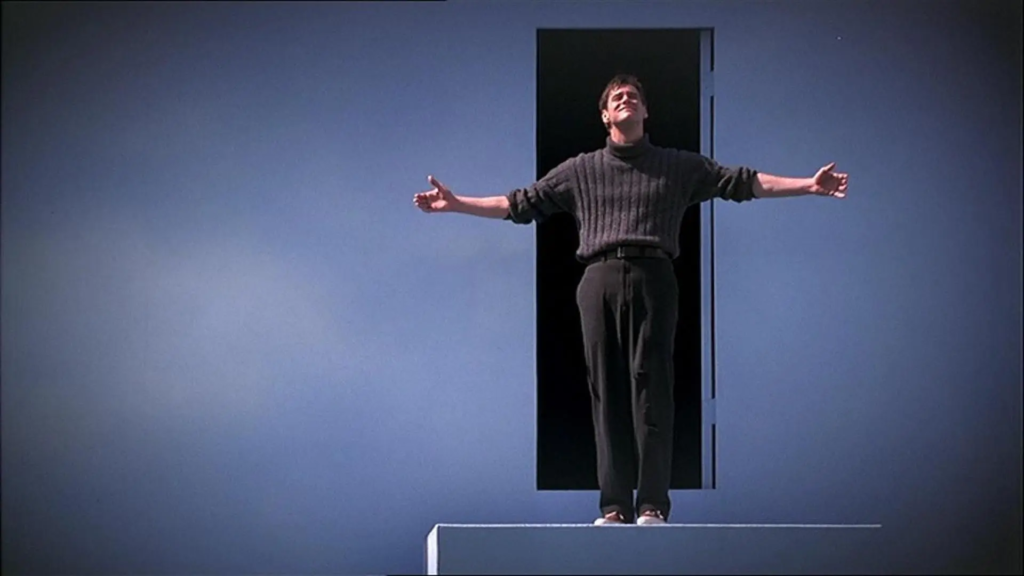
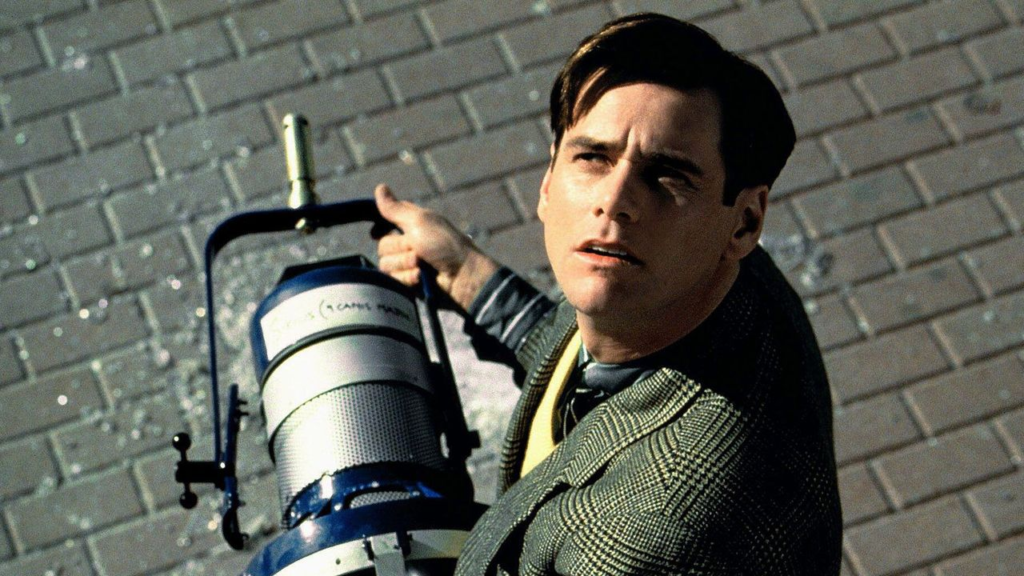
As a director, I find Peter Weir’s framing in this film to be a masterclass in psychological discomfort. He utilizes ‘vignette’ shots and hidden-camera angles (hidden in car dashboards, rings, and even buttons) to make the audience feel like accomplices in Truman’s imprisonment. The lighting of Seahaven is intentionally ‘too perfect’—a high-key, saturated look that feels like a 1950s sitcom on steroids. It creates a visual dissonance: the world looks like a dream, but the subtext is a nightmare.
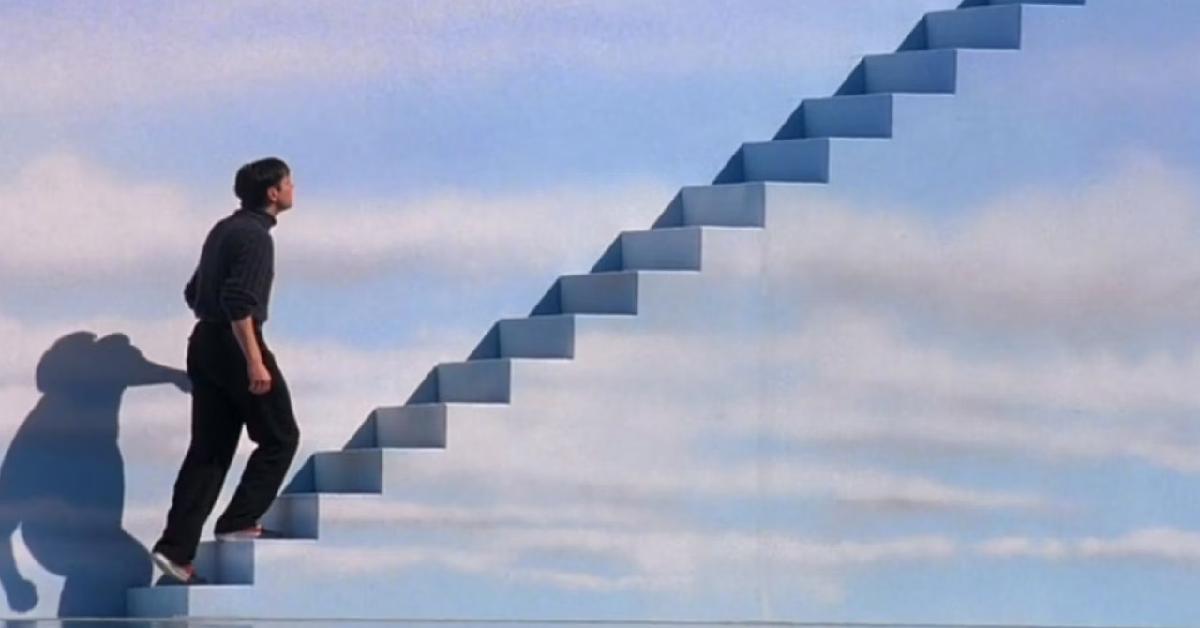
This artifice is what makes the final scene—Truman bowing to his audience—so powerful. He isn’t just exiting a set; he’s breaking the Fourth Wall of his own existence, choosing a grainy, uncertain reality over a high-definition lie.
An Unexpected and Remarkable Jim Carrey Performance
By 1998, Jim Carrey was known for physical comedy and wild characters. The Truman Show proved he could do far more. His performance is vulnerable, restrained, and deeply human — one of the best of his career.
Carrey portrays Truman with innocence and sincerity, making his growing paranoia and desire for truth emotionally powerful. The film balances satire with genuine empathy, and Carrey is the emotional anchor that makes the story resonate.
The supporting cast also shines:
Ed Harris gives a chilling performance as Christof, a director playing God.
Laura Linney is disturbingly perfect as Truman’s artificial wife.
Noah Emmerich, Natascha McElhone, and others help build a world that feels both familiar and unsettlingly fake.
Why the Film Endures
The Truman Show has been studied from countless perspectives:
Existentialism
Christian symbolism
Media ethics
Simulated reality
Mass surveillance
The psychology of observation
Even the term “The Truman Show Delusion” is now used in psychiatry to describe people who believe their lives are secretly being recorded and broadcast.
But the movie endures not just for its ideas — it endures because it is profoundly human.
Truman’s story is about:
authenticity
breaking free from control
reclaiming your life
discovering your own truth
In an era of filters, clicks, curated identities, and constant exposure, that message hits harder than ever.
Final Verdict
The Truman Show is more than a film — it’s a warning, a mirror, and a timeless piece of cinema that predicted the social-media age with chilling accuracy.
Verdict: A bold movie ahead of its time, and still one of Jim Carrey’s greatest performances.
Score: 8.9 / 10
It remains emotionally powerful, visually clever, and thematically rich.It’s a film that could easily fit into a series like Black Mirror today.