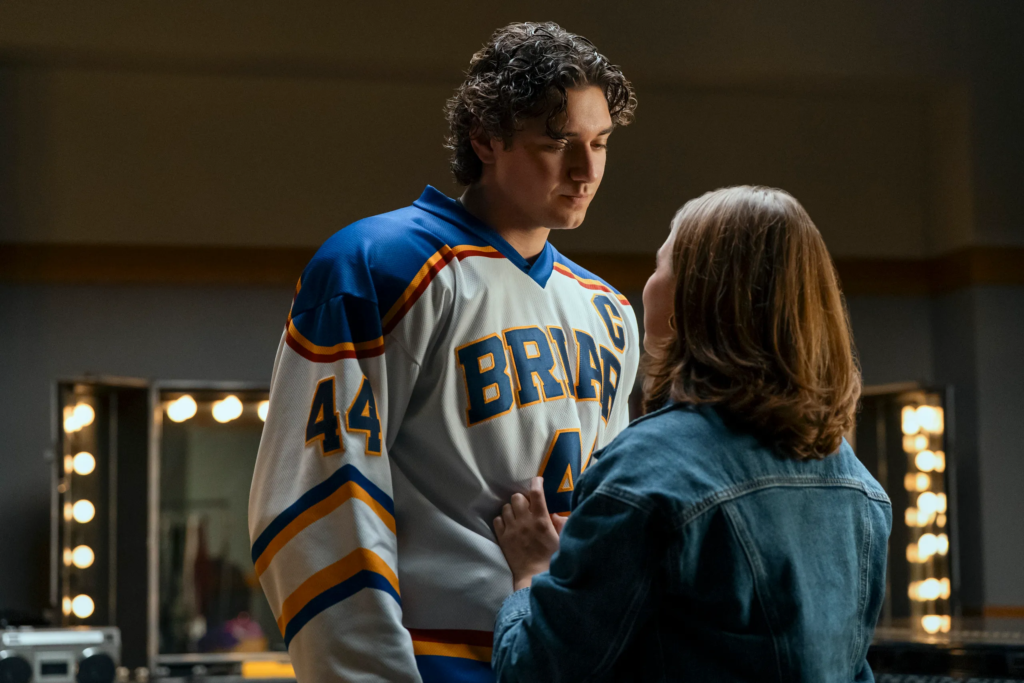
When Amazon MGM Studios first greenlit an adaptation of Elle Kennedy’s bestselling Off Campus series, they knew they had a passionate, built-in literary community waiting in the wings. But absolutely no one—not even the most optimistic studio executives—predicted the historic scale of this rollout.
In just 12 days, the series has pulled in a staggering 36 million viewers worldwide, officially cementing itself as the third most-watched debut series in Prime Video history. Sitting comfortably behind only The Lord of the Rings: The Rings of Power and Fallout, this collegiate romantic drama has left massive, multi-million-dollar flagship franchises trailing in its wake. It has completely overshadowed the conversation surrounding the final season of The Boys, proving that the cultural zeitgeist is shifting away from cynical deconstructions and moving back toward sincere storytelling.
The Flicks n Pop Analysis: Why It’s Overperforming
1. Low Budget, High Engagement Economics
As a director, I find the financial reality of this victory fascinating. The Rings of Power and Fallout cost hundreds of millions of dollars to produce, requiring heavy visual effects and massive soundstages. Off Campus, by comparison, relies entirely on sharp scriptwriting, authentic collegiate production design, and raw character chemistry. By outperforming the massive production budgets of Reacher and The Boys, the show proves that audiences are starving for character-driven narratives. You don’t need a CGI explosion when your lead actors possess a tangible spark that lights up the screen.
2. Bridging the “BookTok” and Mainstream Divide
While The Summer I Turned Pretty proved the viability of Young Adult romance adaptations on streaming, Off Campus successfully aged up the concept into the “New Adult” space. It captured the highly lucrative BookTok demographic while delivering a narrative that handles mature, real-world themes with dignity. The show doesn’t treat the romance genre as “lesser than”—it gives the emotional stakes the same cinematic weight a director would give to a high-stakes thriller.
3. Story-First Representation Over Forced Agendas
A major reason Off Campus is resonating so deeply is its organic approach to storytelling. Modern streaming audiences have grown weary of projects that feel like they were written by a corporate committee checking off diversity boxes or forcing socio-political agendas. Off Campus succeeds because its focus remains strictly on character growth and narrative progression. The diversity within the cast feels natural to a modern university setting, allowing the story to remain simple, grounded, and reminiscent of the classic romantic dramas of the past rather than a clinical streaming-era product.
4. The Rise of the “Feel-Good” Drama
For the last decade, teen and collegiate dramas have drifted into extreme darkness, defined by murder mysteries, trauma-dumping, and bleak toxicity. Off Campus completely differentiates itself by operating as a feel-good drama. It features enough internal conflict to keep the audience thoroughly engaged, but it actively avoids unnecessary love triangles, forced inclusion, and toxic relational dynamics. It offers an old-fashioned romantic tale where the central group of friends functions as a genuine, protective community. Every supporting character feels deeply endearing rather than disposable.
5. The Anthology Formula
Much like Netflix’s Bridgerton, the creative team has confirmed that Off Campus will alter its central romantic pairing from season to season, following the progression of the novels. However, the showrunners have smartly noted that no one from the original core group will disappear. The entire gang remains crucial to the overarching narrative fabric. The writing relies on a simple, beautifully executed formula that doesn’t artificially elongate misunderstandings or drag out unnecessary drama. It allows the audience to simply enjoy spending time in this world.
6. A Rejection of Toxic Romance
A frequent criticism of modern romance media is the glorification of toxic behavior—jealousy, manipulation, and codependency disguised as passion. Off Campus radically departs from this trope. The characters have clear personal aspirations, communication skills, and genuine respect for one another. While the series certainly doesn’t shy away from explicit, steamy sequences, it uses those moments to enhance the emotional intimacy of the storytelling rather than using them as cheap, sensationalized filler.
The Word-of-Mouth Machine
Ultimately, the historic rise of Off Campus is a victory for traditional word-of-mouth marketing. The series is packed with highly cinematic, musical, and emotionally resonant moments that translate perfectly into viral social media clips. These organic snippets have set platforms like TikTok and X ablaze, driving millions of non-readers to open Prime Video out of sheer curiosity.
While the show may not be traditional awards-season bait, it has rewritten the streaming playbook for 2026. It proves that relatable characters and a well-told story will always triumph over overcomplicated, cynical blockbusters. Expect every rival streaming platform to spend the rest of the year desperately trying to find their own Briar University. For more on Off Campus, check out our analysis on how it reminds us of John Hughes’ teen-oriented films.
Have you jumped on the Off Campus bandwagon and watched it yet? Let us know what you think of this phenomenon in the comments!