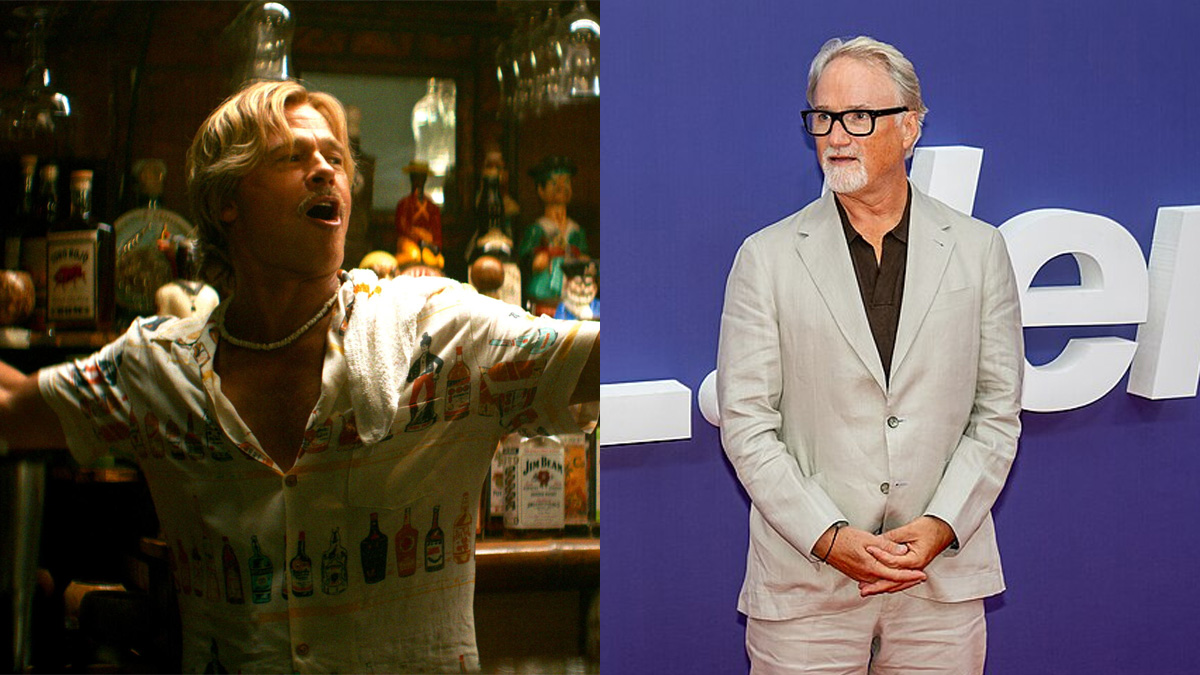
Just as Netflix’s The Further Mis-Adventures of Cliff Booth arrives in IMAX theaters on November 25, 2026—following early guild screenings and ahead of its December 23 streaming debut—the conversation surrounding Brad Pitt’s return as Quentin Tarantino’s laid-back stuntman has been completely hijacked by generative AI backlash.
Fans of David Fincher and cinephiles across social media are erupting over the inclusion of AI tools in the film. Because Fincher has spent three decades earning a reputation as Hollywood’s ultimate obsessive perfectionist, seeing one of modern cinema’s greatest craftsmen embrace such a divisive shortcut—especially on a sequel written by Tarantino—has left many viewers deeply disappointed by the film’s visual effects.
After telling The Los Angeles Times last week that he is “not a Luddite” and questioning why filmmakers shouldn’t use AI to change an actor’s eye color if the tool exists, Fincher explicitly confirmed on November 25 during an appearance on The Ringer’s The Big Picture podcast that he used AI on Cliff Booth. Declaring, “I’m not going backwards,” Fincher dismissed critics who act as though cinema peaked in 1979.
Film Twitter isn’t buying it—with thousands of disappointed fans now openly accusing the once-untouchable auteur of becoming “washed”.
What Fincher Claimed Were “Small Fixes”—And Why Fans Turned on Him

During his podcast interview, Fincher attempted to frame artificial intelligence as a practical post-production precision tool—revealing he used it to clean up audio tracks and “re-lip” actors’ mouths to match preferred dialogue readings—rather than a replacement for human performers:
“I won’t miss focus in A.I., and I will land and stick the dolly shot in A.I., and I will be able to make sure that that hair doesn’t cross right in front of your cornea in A.I.”
While Fincher argued that this workflow could spare actors from enduring 20 to 70 exhausting takes per setup, fans immediately dismantled his defense on three fronts:
- Why Film Twitter Is Calling Him “Washed”: Cinephiles quickly pointed out a glaring contradiction—if a director needs AI to salvage a missed focus pull or smooth out a dolly movement in post-production, he didn’t actually “land” the shot on set. For a filmmaker famous for shooting 70 to 100 takes on Zodiac and The Social Network to capture genuine human precision, relying on algorithmic touch-ups feels like an artist growing complacent. TheWrap
- The Glitches Viewers Actually Spotted: Worse for Fincher’s “invisible tool” argument, critics and viewers who attended early screenings immediately flagged a “generative supervisor” listed in the end credits—alongside reports of garbled background signage, shifting facial details, and uncanny physics across the $123 million production. Kotaku
| Fincher’s Post-Production Pitch | What Audiences Actually Saw on Screen |
|---|---|
| “Precision Fixes” — Cleaning dialogue tracks, re-lipping lines, and adjusting eye color or stray hairs | Visible Artifacts — Garbled background text, shifting details, and uncanny movement physics |
| “Fewer Takes for Actors” — Using AI to land dolly shots and focus pulls without 70-take marathons | Loss of Craft — Fans viewing post-production fixes as abandoning the rigor that made him a master |
A Filmmaker’s Take: Digital Pioneer vs. Generative Shortcuts
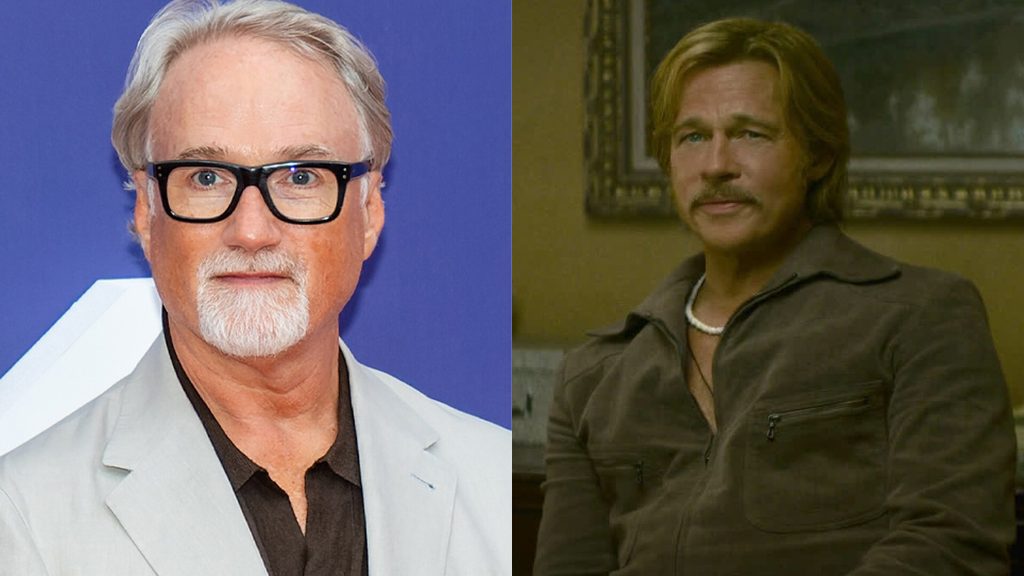
Speaking from a filmmaker’s perspective, Fincher’s curiosity toward new technology isn’t surprising—even if its execution here feels jarring.
- Why His Past Tech Worked: Throughout his career, Fincher has fearlessly pushed digital boundaries—pioneering RED digital cinema on Zodiac, breakthrough facial performance capture on The Curious Case of Benjamin Button, and seamless CGI blood and set extensions. Those innovations amplified the work of cinematographers, focus pullers, and VFX artists. Just as early CGI looked rough before maturing into an indispensable filmmaking tool, Fincher clearly views AI as the next inevitable step in the evolution of post-production.
- Where Cliff Booth Crossed the Line: The problem is context and execution. When generative AI is used to patch camera movement or alter frames inside a gritty 1970s period piece written by Quentin Tarantino—cinema’s fiercest defender of 35mm celluloid—the aesthetic clash is immediate. Audiences forgive any filmmaking technology when it remains invisible, but the exact second the seams show, immersion shatters.
🍿 RECOMMENDED READ:
How The Further Mis-Adventures of Cliff Booth, The Odyssey, and Dune: Part Three are shaping up a chaotic Oscar season.
The Verdict
Whether Hollywood purists like it or not, Fincher’s blunt “It exists. Should we not use it?” stance—backed by industry tools like InterPositive, the dailies-trained AI startup founded by Ben Affleck (following early discussions with Matt Damon) that Netflix acquired earlier this year—proves major auteurs are already experimenting with AI behind closed doors.
Still, the fierce backlash hitting The Further Mis-Adventures of Cliff Booth delivers an unmistakable warning to studios and directors alike: audiences aren’t ready to give even a legendary perfectionist a free pass when artificial intelligence leaves visible fingerprints on the screen.
Do you agree with David Fincher using AI for “small fixes” in The Further Mis-Adventures of Cliff Booth, or does it undermine his reputation as a perfectionist? Drop your take in the comments below!

Written by Paco Chanona
Paco Chanona is a filmmaker, screenwriter, and founder of Flicks n Pop. A Vancouver Film School alumnus with over 14 years in media production across Canada and Mexico, he covers film analysis, studio box office trends, and industry news.