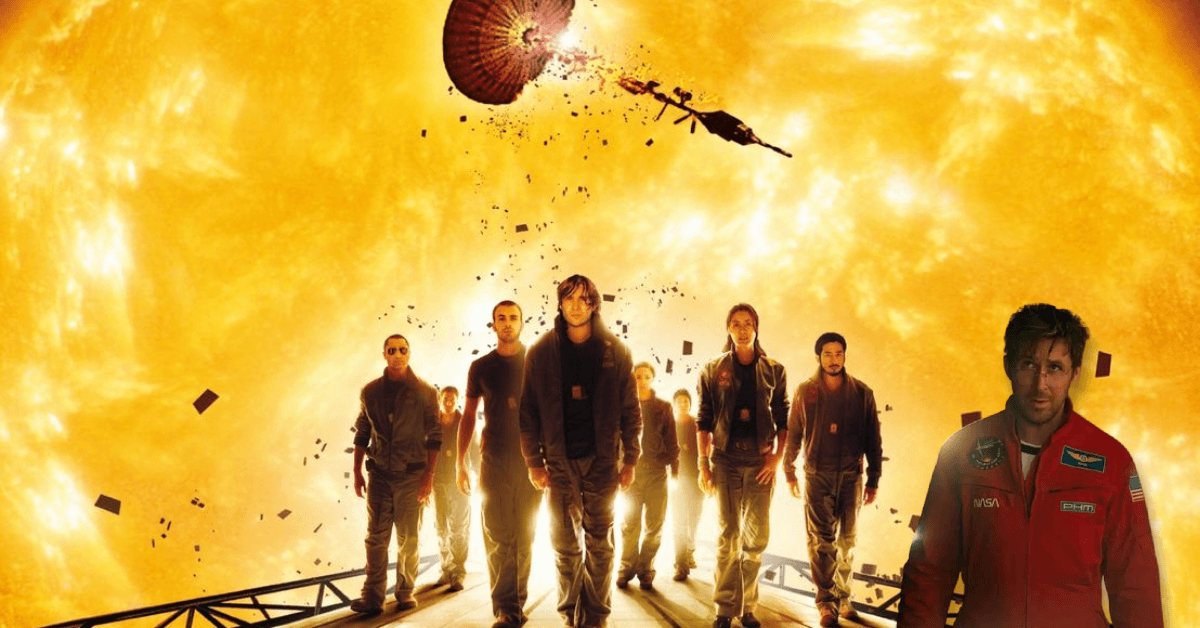
Here at Flicksnpop, we love taking a deep look back at modern sci-fi classics—especially those that came tantalizingly close to true cinematic greatness. Few movies fit that description quite like Danny Boyle’s 2007 epic, Sunshine. Armed with a brilliant script by Alex Garland, a hypnotic score by John Murphy and Underworld, and an absolute dream ensemble (Cillian Murphy, Chris Evans, Rose Byrne, Michelle Yeoh, and Hiroyuki Sanada), the film had every ingredient needed to become a timeless sci-fi masterpiece.
Yet, nearly two decades later, Sunshine remains a divisive, cult classic primarily remembered for one major flaw: a jarring third-act shift that completely derailed its philosophical momentum.
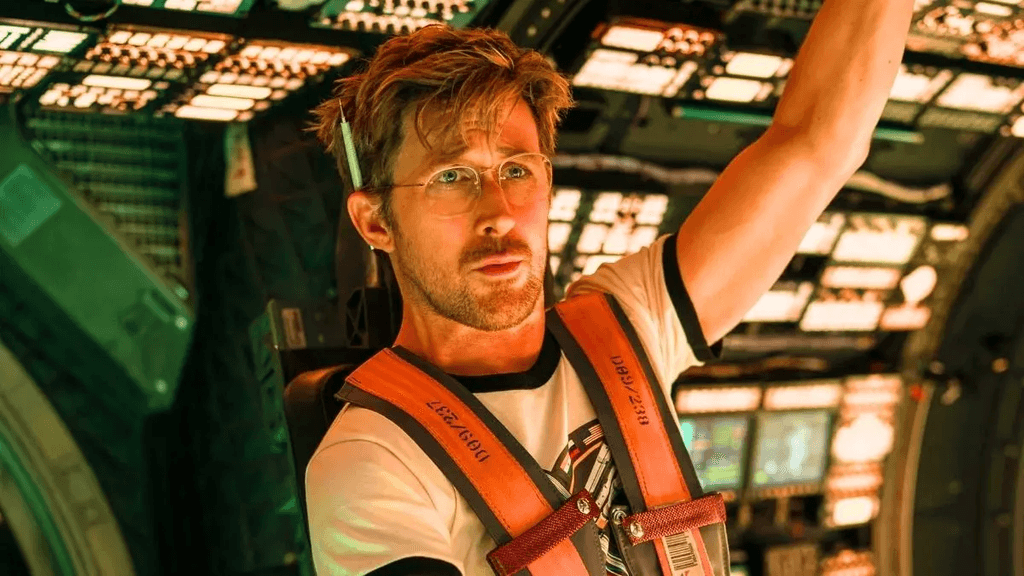
This contrast feels especially relevant following the release of Lord and Miller’s adaptation of Project Hail Mary. While differing in tone, both films share an identical high-concept premise: a desperate space mission to reignite a dying sun and save humanity from total extinction. But where Sunshine lost faith in its core premise during the final stretch, Project Hail Mary proved that sticking to scientific problem-solving and psychological tension is how you stick the landing.
The Brilliance of Acts 1 & 2: Space, Logic, and Moral Dilemmas
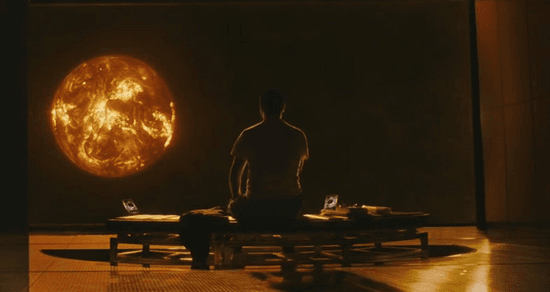
For its first 60 minutes, Sunshine is nothing short of breathtaking. The film constructs a suffocating, atmospheric examination of human isolation, existential dread, and utilitarian ethics. The true antagonist isn’t an alien monster or a cackling villain; it is cold, unyielding space logic and human error.
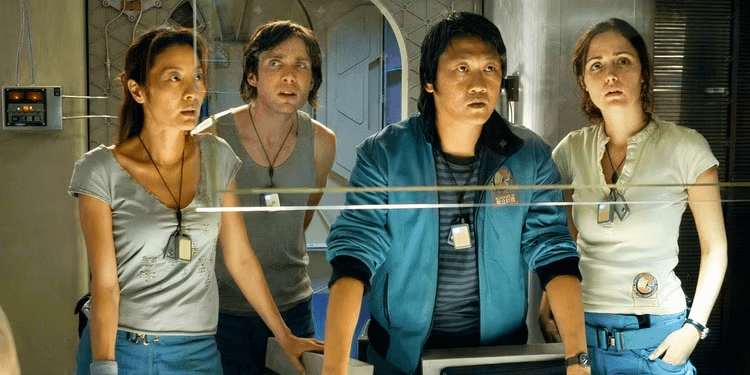
The narrative shines brightest when forcing its crew aboard the Icarus II to make impossible, mathematical choices:
Cold Utilitarian Logic: Chris Evans delivers a career-best pre-Captain America performance as Mace, arguing with terrifying, pragmatic clarity to sacrifice human life if it guarantees the payload reaches the sun.
Psychological Weight: Cillian Murphy’s Capa anchors the narrative with quiet vulnerability, portraying the immense psychological burden of staring directly into a dying star.
Grounded Physics: The tension stems naturally from oxygen calculations, heat shield recalibrations, and the staggering weight of a suicidal mission where one minor miscalculation means the end of humanity.
Without relying on an explicit villain, the first two acts built elite-level dramatic tension strictly out of human character dynamics and the terrifying, indifferent void of space.
The Third-Act Collapse: When a Sci-Fi Epic Became a Slasher
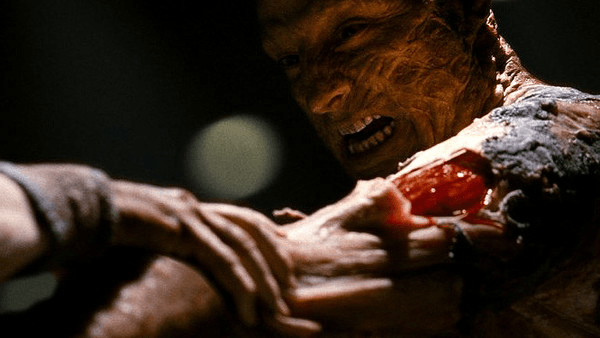
Then comes the infamous third act. Rather than resolving its high-stakes moral dilemmas, the film abruptly pivots into a generic slasher movie with the sudden arrival of Captain Pinbacker—the sunburned, religious zealot survivor from the long-lost Icarus I.
Instead of serving as an eerie thematic warning, Pinbacker is presented as an unstoppable, slasher-style monster hunting crew members down dark hallways with a scalpel. The stylistic shift is equally jarring: Danny Boyle abandons the pristine, atmospheric visual language of the first two acts in favor of disorienting, blurry shutter-angle distortion and shaky-cam jump scares every time Pinbacker appears.
By swapping philosophical dread for generic B-movie tropes, the third act cheapens the narrative. It trades a profound study of human endurance for chaotic action, leaving all the rich character growth behind.
What Could Have Been: The ‘Project Hail Mary’ Contrast
The narrative stumble in Sunshine makes you realize just how difficult it is to sustain third-act tension in a hard sci-fi film. That is precisely why Project Hail Mary stood out as such a triumph.
Both films deal with identical cosmic stakes:
A dying sun threatening Earth with imminent extinction.
A desperate, long-shot mission launched into the void as humanity’s final hope.
A ticking clock where every technical failure means global annihilation.
Project Hail Mary proved that you don’t need a slasher villain to keep audiences on the edge of their seats. The threat of failing life support systems, complex orbital physics, unexpected scientific setbacks, and selfless sacrifice are more than enough to create heart-pounding cinema. While Project Hail Mary leans into a lighter, more optimistic tone compared to Sunshine‘s dark atmosphere, it proved that modern sci-fi succeeds best when filmmakers trust that science, isolation, and cosmic awe are terrifying enough on their own.
From restored subplots to pacing, here is how long-form storytelling gives genre adaptations room to breathe.
The Verdict & Final Legacy
Despite its flawed final stretch, Sunshine remains a visually magnificent, brilliantly acted, and haunting cinematic experience that every true sci-fi fan should watch. Its third act serves as a cautionary tale for storytellers who lose faith in their own subtext—while Project Hail Mary stands as proof that sticking to your core scientific premise can turn a great concept into an absolute masterpiece.
Do you think Pinbacker’s arrival ruined Sunshine‘s third act, or do you enjoy the sudden shift into slasher-style cosmic horror? Let us know your take in the comments below!