This weekend, Christopher Nolan’s The Odyssey absolutely shattered every box office expectation, pulling in a stunning $264.1 million globally to score his biggest international opening weekend outside of the Dark Knight trilogy. It is a staggering commercial achievement for an R-rated, three-hour adaptation of a 2,700-year-old epic poem.
But the true victory of The Odyssey isn’t the historical box office haul. It’s the fact that Nolan looked at modern Hollywood’s over-reliance on hollow digital imagery and chose to build an ancient world out of real wood, seawater, and pure celluloid. He didn’t just adapt Homer’s classic text; he actively wrestled it into his own signature cinematic philosophy.
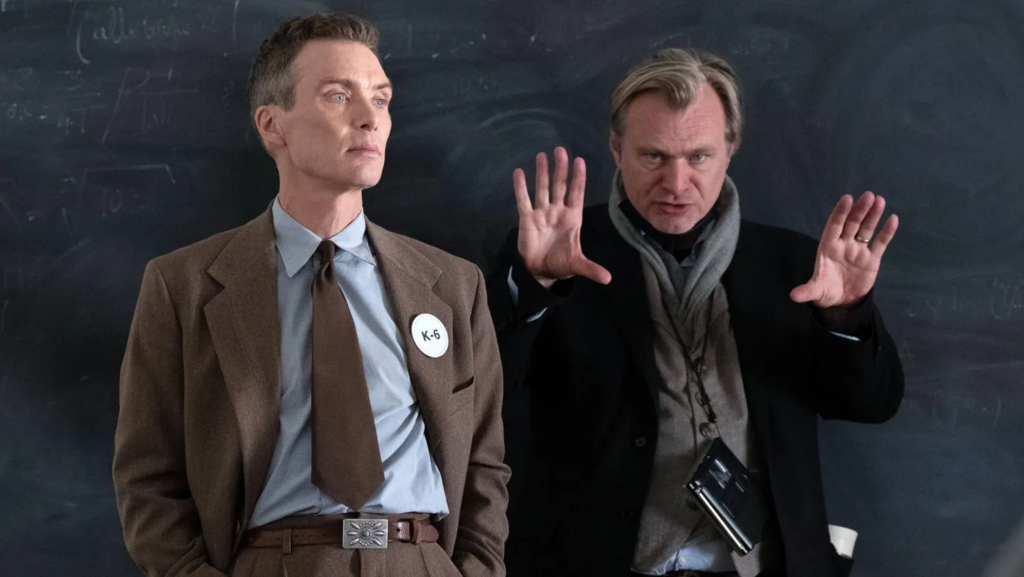
These massive box office results arrived despite an intense outburst across diverse social media platforms, where online detractors claimed the movie’s inclusive casting and modern language choices would cause it to flop at the theaters. However, Nolan’s name has become completely synonymous with box office gold. His previous outing, the biographical drama Oppenheimer, not only won big at the Academy Awards® including Best Picture, but became a global hit with over $975 million in ticket sales—something previously unheard of for a dense, R-rated historical drama.
It seems that only Nolan can take a well-established property like a nearly 3,000-year-old poem and ground it in absolute realism. Even when the subject matter deals directly with gods, monsters, and deep fantasy elements, he managed to execute the vast majority of the visual effects practically and on-camera. In 2026, where a bloated CGI circus is the strict corporate norm, this approach feels almost impossible.
The Director’s Insight: The Creative Analysis
1. The Non-Linear Reconstruction of an Ancient Poem
Homer’s original text is inherently messy—a fragmented, episodic journey spanning ten years of chaotic wandering. In the hands of a lesser studio filmmaker, this narrative architecture would have been ironed out into a predictable, chronological, and flat action movie.
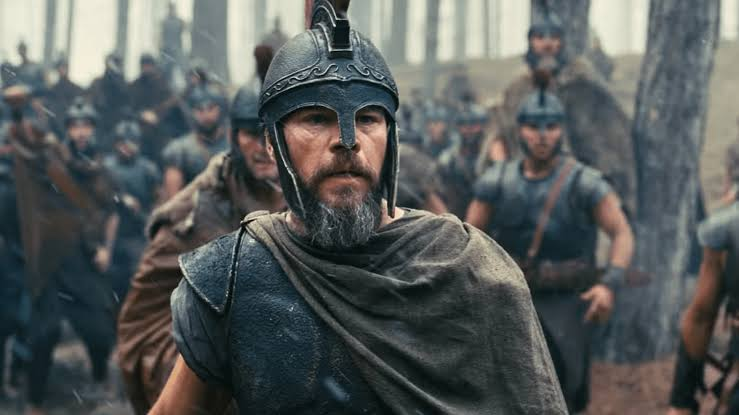
But Nolan treats the source material like a deep psychological puzzle box. By structuralizing The Odyssey with a non-linear script layout, Nolan perfectly mimics the fractured trauma of Matt Damon’s Odysseus. He cleverly lets the horrific memories of the Siege of Troy bleed into the present timeline.
Rather than presenting a simple adventure, the director turns the narrative inward. By removing the literal, active pantheon of Olympian gods and reducing Zendaya’s Athena to a haunting psychological manifestation of Odysseus’s internal guilt and conscience, he weaponizes his hallmark fixation on subjective time, memory, and perception to make an ancient story feel intensely modern.
2. The Grand Illusions of the Practical Epic
The modern film industry has spent a decade training audiences to believe that massive scale requires green screens, volume stages, and artificial post-production pipelines. The Odyssey proudly rebels against that entire corporate philosophy.
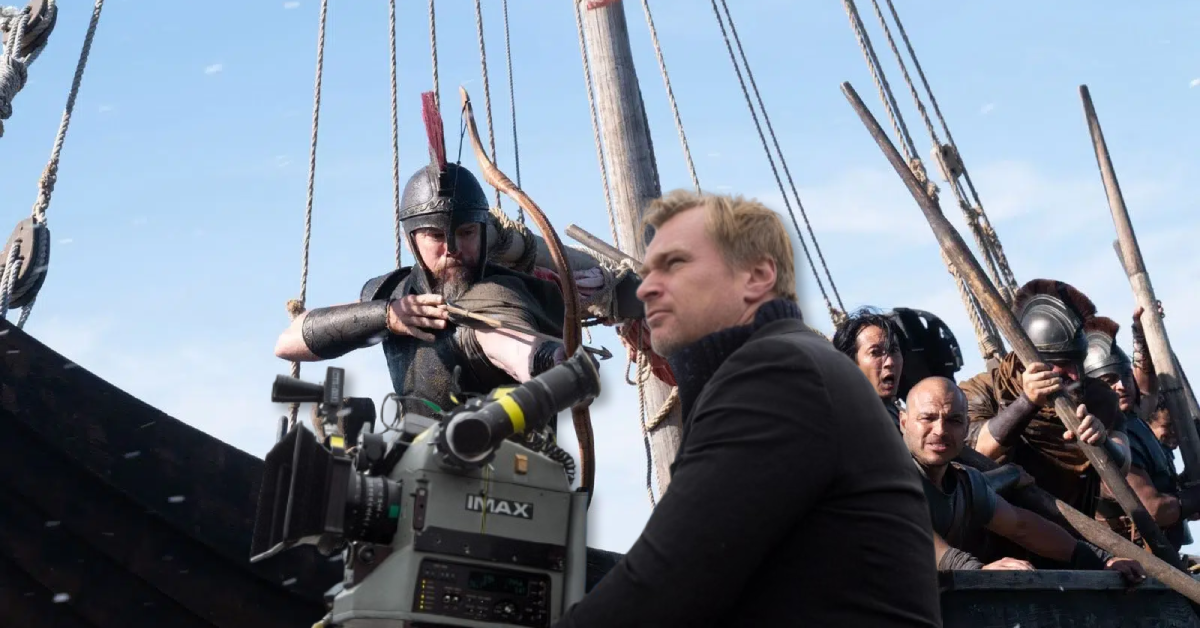
Shot entirely with heavy 15-readout 70mm IMAX cameras on location across the rugged, unforgiving Mediterranean, the production relies entirely on mechanical special effects, physical ship builds, and brilliant optical illusions to bring terrifying encounters like the Cyclops, Scylla, and Charybdis to life.
As a viewer, you can physically feel the grit of the ocean spray hitting the lens and the physical weight of the actors interacting with a tangible environment. It is an Old Hollywood approach that feels entirely revolutionary in 2026, reminding us that physical constraints breed legendary art.
Christopher Nolan as the Ultimate Theatrical Event
Christopher Nolan doesn’t just possess a unique, uncompromising filmography; he has achieved a rare, god-tier status in modern Hollywood. Every single time he releases a new feature film, the entire entertainment ecosystem grinds to a halt. A Nolan premiere transforms into a major cultural event—a feat that is almost impossible to pull off in today’s hyper-saturated, fast-moving social media landscape.
By tackling an enormous task like The Odyssey, he proved that original auteur vision can completely out-muscle standard studio formulas. back-stopped by a powerhouse ensemble cast including Tom Holland, Robert Pattinson, Anne Hathaway, and Charlize Theron, he leaned strictly on old-school cinematic techniques to capture the imagination of the masses.
Every project he mounts has become an ironclad guarantee of a completely unique experience at the movie theater. He remains a true auteur who knows exactly how to combine massive commercial spectacle and high-concept storytelling with an innovative narrative structure that forces you to think, reflect, and be deeply entertained all at the same time.
Conclusion
As The Odyssey continues to sell out 70mm IMAX auditoriums worldwide well into the coming weeks, the industry has been left with an undeniable truth. Audiences are not tired of grand historical epics; they are simply tired of hollow, weightless digital creations. Christopher Nolan didn’t just sail past the CGI trap—he blew it wide open, proving that the ancient art of physical, practical cinema remains the greatest special effect of all.
What about you? What are your thoughts on The Odyssey? Is it another great achievement by Christopher Nolan, or do you think it’s overrated? Let us know in the comments!