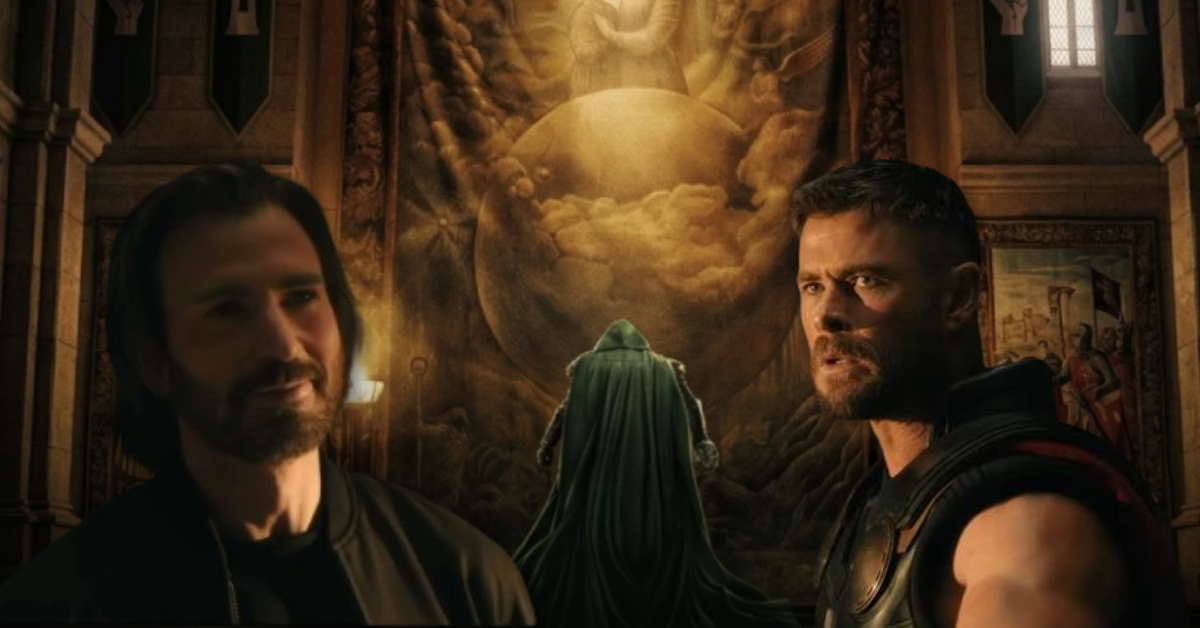
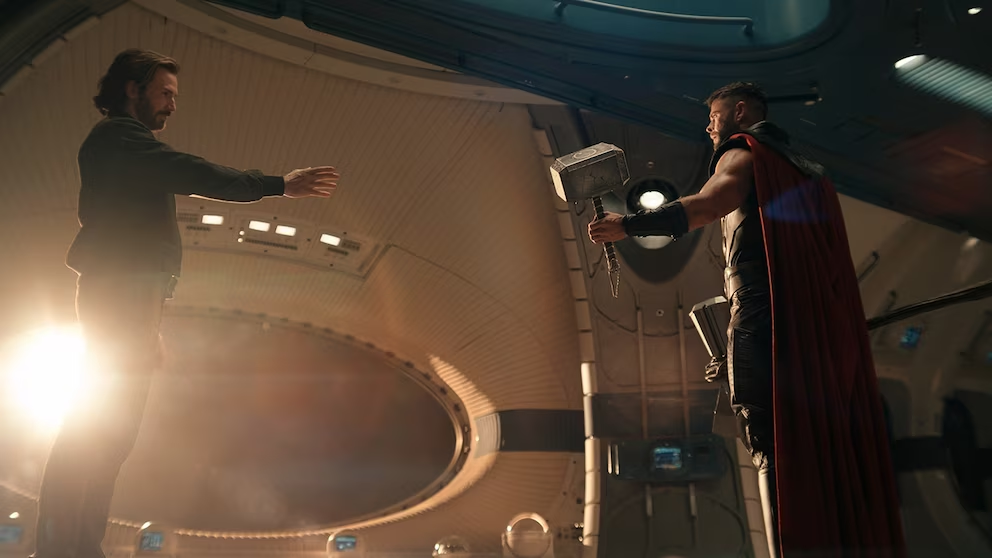
Today, Marvel Studios finally broke the emergency glass. The highly anticipated first full trailer for Avengers: Doomsday didn’t just drop—it practically detonated across the internet. For two and a half minutes, audiences were treated to a relentless barrage of cinematic legacy: Patrick Stewart’s Professor X signaling the X-Men’s formal MCU arrival, Chris Evans returning to weave back into the fold by wielding Thor’s hammer, and our first extended, chilling look at Robert Downey Jr. as Doctor Doom.
The footage is precision-engineered to evoke pure, theatrical euphoria. But stripping away the immediate fan adrenaline and looking through a director’s lens, this trailer exposes a deeper, highly calculated studio anxiety. Avengers: Doomsday isn’t mapping out the future of cinema; it is running an aggressive campaign to resurrect 2019.
At first glance, it seems that this is just pure fanservice—a teaser and a movie manufactured to bring audiences back in massive numbers to the movie theater. It functions as a clear attempt by Marvel to remind everyone exactly what they are capable of when it comes to massive comic book spectacle on the big screen.
But at the same time, it feels like a desperate attempt to rescue Hollywood’s biggest franchise after it hit its definitive creative peak in 2019 with Endgame, before wandering downhill without a cohesive plan or structural vision for its shared universe. Since then, the studio has relied on just a couple of isolated hits with critics, audiences, and the box office alike.
Remember, the studio’s original blueprint for this phase centered on an overarching Avengers event featuring Kang the Conqueror as the primary villain. Those plans had to be entirely scratched for several reasons. For one, the main anchors of the MCU’s golden era, Iron Man and Captain America, were no longer involved, and general audiences were visibly losing interest. Furthermore, Kang was never effectively established as a menacing enough threat to generate massive public interest in a multi-film event, and Jonathan Majors’ real-world controversies only accelerated the narrative collapse.
So, Marvel’s grand rescue plan boils down to checking the ultimate corporate boxes: bringing back Robert Downey Jr. now transformed into the central antagonist Doctor Doom, alongside Chris Evans’ iconic return. This leaves a significant portion of the audience worried that the studio is placing all its bets on superficial nostalgia rather than the great storytelling that defined the early eras of the Marvel Cinematic Universe.
The Director’s Insight
1. The Variant Trap vs. Genuine Character Work
The centerpiece of the entire trailer is undeniably Robert Downey Jr. cloaked in the classic green hood and iron mask of Victor von Doom. While general audiences are cheering for the return of the franchise king, the screenplay architecture reveals an immense creative challenge. By casting the literal face of their dead cinematic savior (Tony Stark) to play their ultimate new villain, Anthony and Joe Russo are backing themselves into a tight narrative corner.
Is Doom going to be treated as a complex, independent villain with his own distinct philosophical weight, or will the movie constantly stumble over the meta-textual irony of his familiar face? When a film relies heavily on the audience’s real-world knowledge of an actor rather than the script’s internal characterization, the storytelling risks becoming entirely clinical.
2. The Illusion of Stakes in the Multiverse Sandbox
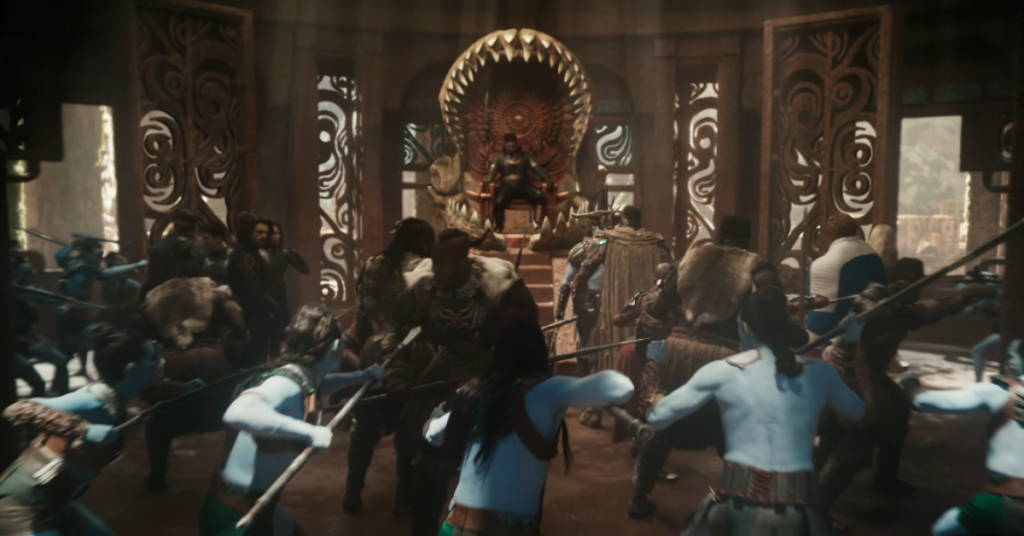
The trailer prominently features massive universe collisions on a grand visual scale: Channing Tatum’s Gambit clashing with Simu Liu’s Shang-Chi, and Florence Pugh’s Yelena battling Rebecca Romijn’s Mystique.
Visually, it is an astonishing playground. But as we recently analyzed with the meteoric rise of simple, practical cinema like Obsession and The Odyssey, deep audience investment relies entirely on focused creative constraints. When a script throws three separate universes into a blender, individual stakes tend to completely vaporize. If any character can effortlessly return as an alternate variant, and any world can be seamlessly destroyed and rebuilt, the human elements of personal sacrifice and finality that made Endgame legendary are completely compromised. The Russos have a massive mountain to climb to prove this is a story worth telling, rather than a corporate checklist designed to protect a bottom line.
What the Teaser Promises—and Why It Makes Fans Anxious
While the footage guarantees that a vast web of main and background characters will all be mixed together in this event film, the primary worry among fans is whether any major hero will get an actual, earned character arc. The fear is that the film will reduce these characters to glorified cameos included simply for the sake of marketing and drawing crowds to theaters.
It promises to be a fan festival of epic battles, giving the impression that the entire plot takes place over the course of a single day, moving from one exhausting combat sequence to the next. While it will likely feature the deaths of various main characters, it seems structurally designed to function primarily as a transitional first part setting up the next entry, Avengers: Secret Wars.
Ultimately, the core fear is that the movie will fail to deliver a coherent, grounded story, relying instead on epic CGI warfare over meaningful character work. The Russo brothers have a massive challenge ahead of them. They have absolutely proved their worth within the boundaries of the Marvel machine, but their directorial work outside the MCU hasn’t been nearly as prolific or critically well-received. Fans remain anxious, but they are holding onto the hope that their creative collaboration alongside Marvel chief Kevin Feige is what will ultimately elevate the material.
Conclusion
Slated for a historic theatrical release on December 18, 2026, Avengers: Doomsday is officially the highest-stakes gamble in modern studio history. Whether it marks a triumphant return to form or the final collapse of the shared-universe model depends entirely on the script. Marvel has successfully generated the adrenaline; now they have to prove they still know how to write a human story.
Avengers: Doomsday will also attempt to prove that the comic book movie era isn’t over, following recent comments from the writer of The Batman Part II, who argued that video game adaptations have become Hollywood’s new priority.
So, what do you think about the Avengers: Doomsday trailer? Was it everything you were hoping for, or do you think it left something to be desired? Let us know in the comments!