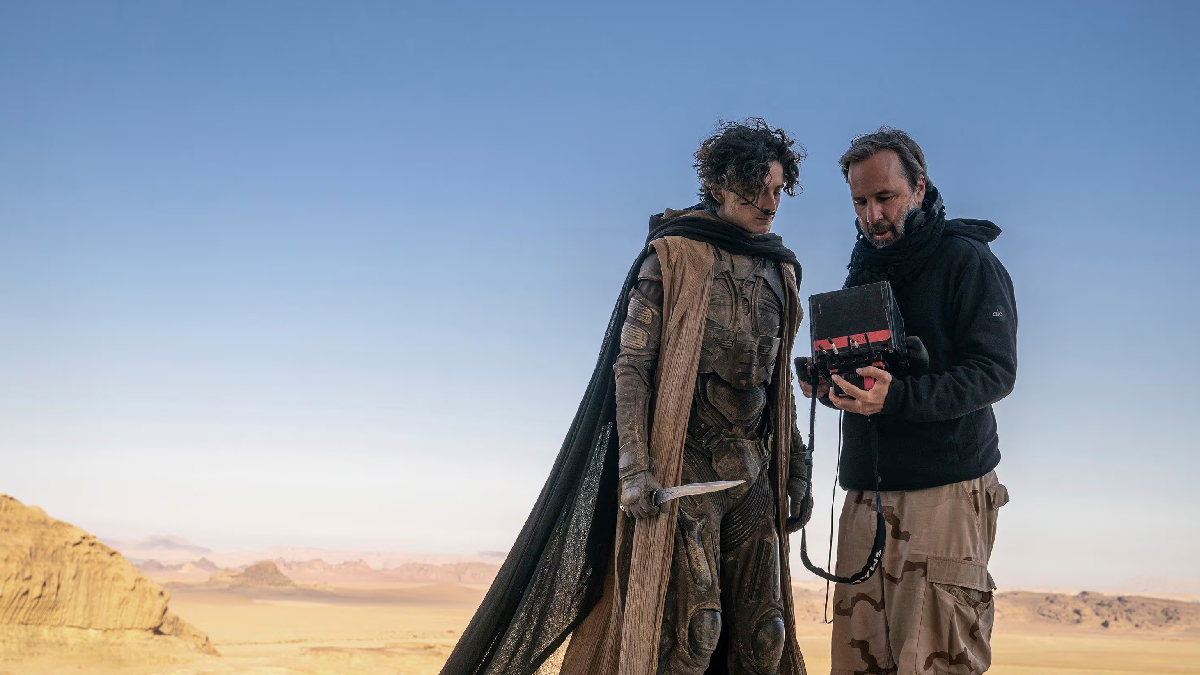
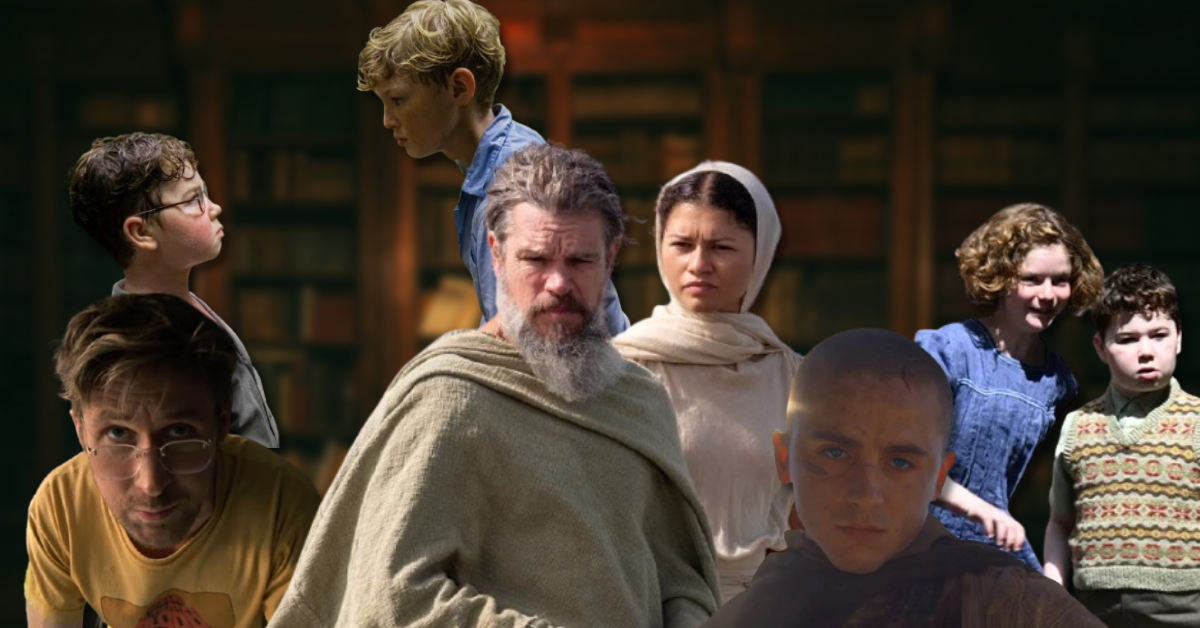
Ever since Denis Villeneuve’s third Dune film was officially announced, book readers and sci-fi fans have wondered just how closely it would follow Frank Herbert’s 1969 novel, Dune Messiah. Unlike the universally beloved first book, Dune Messiah has always divided readers—a dense, claustrophobic, and deeply tragic political thriller that takes sharp, unsettling turns with Paul Atreides’ destiny. And while Villeneuve’s trilogy finale is still heading toward a sobering conclusion, book purists shouldn’t expect a page-by-page translation, starting with the name change and calling the movie simply Dune Part 3.
In a candid new interview with TIME, Villeneuve explained why he dropped Herbert’s book title altogether—admitting that Dune Messiah is essentially a paranoid “chamber piece” where characters mostly sit in rooms talking:
“The opening battle—which is about 15 minutes in the movie—is one sentence in the book. It’s such a free adaptation that I felt it would have been dishonest to call the movie Dune Messiah. That’s why it’s called Dune: Part Three.”
Villeneuve also revealed that this expanded 15-minute opening battle draws direct visual inspiration from the Normandy landing in Steven Spielberg’s Saving Private Ryan—a creative swing that already earned rave reactions from press who previewed the footage at CinemaCon 2026.
Book vs. Screen: How ‘Dune: Part Three’ Reimagines ‘Dune Messiah’
Left: Book cover via Ace / Penguin Random House; Right: Poster via Warner Bros. Pictures / Legendary Entertainment
Story Element
Frank Herbert’s Dune Messiah (1969)
Denis Villeneuve’s Dune: Part Three (2026)
Opening Sequence
A single sentence referencing Paul’s galactic Jihad
A visceral 15-minute battle inspired by Saving Private Ryan
Chani’s Role (Zendaya)
Unconditionally devoted concubine who dies after childbirth
Active critic & rebel fighting to free the Fremen from Paul’s regime
Timeline & Family
Covers the immediate fallout leading to the birth of twins
Jumps ahead years later as Paul and Chani raise teenage children
Princess Irulan (Florence Pugh)
Political conspirator plotting against Paul’s heir
Enters a surreal, Theseus and the Minotaur labyrinth inside Paul’s mind
The Biggest Departure: Rewriting Zendaya’s Chani
Image via Warner Bros. Pictures / Legendary Entertainment
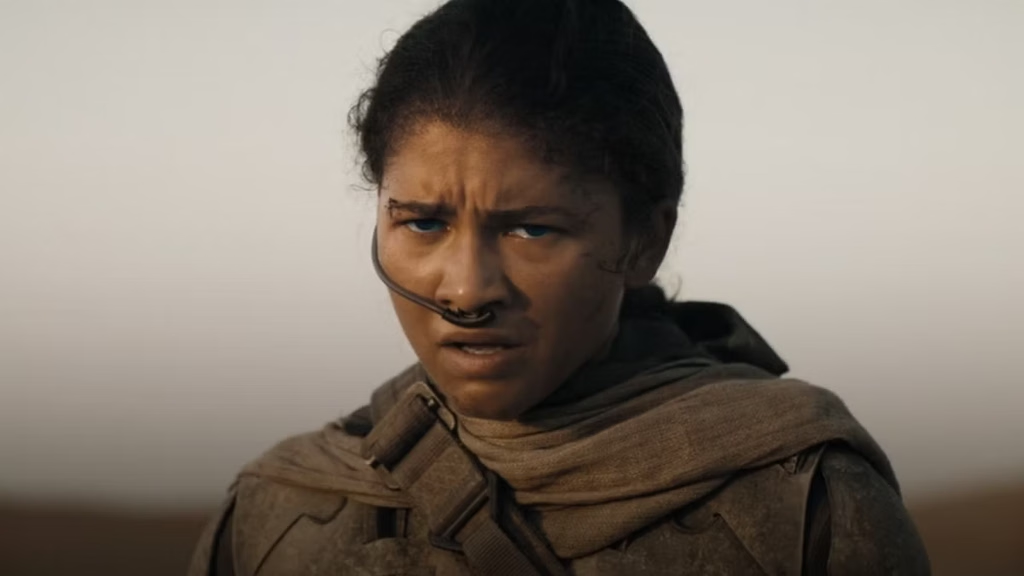
The storyline change sparking the fiercest debate among longtime fans centers on Zendaya’s Chani. Following a significant time jump in which Paul Atreides (Timothée Chalamet) and Chani are raising teenage children, Chani does not remain unconditionally devoted to Paul as she does in Herbert’s novel.
Villeneuve already planted the seeds for this rift in the final moments of Dune: Part Two. Rather than seeking to hurt Paul personally, Chani actively opposes his imperial regime because she believes the Fremen must liberate themselves rather than submit to an outside messiah. Villeneuve didn’t mince words when explaining why he overhauled her arc:
“I would have loved to have taken Frank Herbert for a coffee about these ideas because I think he could have liked them. In his book, Chani is there to give Paul foot massages. It’s a character that has not a lot of firepower.”
Inside Paul’s Paranoia and Princess Irulan’s New Role
Images via Warner Bros. Pictures / Legendary Entertainment
Alongside Chani’s rebellion, Villeneuve shared two major narrative additions he crafted specifically for Dune: Part Three:
Paul’s Fractured Mind: At the start of the film, Paul is isolated, paranoid, unable to find a peaceful exit from the violence, and losing his grip on reality. Villeneuve framed the rift between Paul and Chani around a deeply human, grounded question—what kind of world and legacy parents leave behind for their children when a family fractures.
Princess Irulan’s Labyrinth: Because Paul has shut everyone—including his political wife—out for years, Villeneuve designed a surreal, subconscious sequence for Princess Irulan (Florence Pugh). Inspired by the Greek myth of Theseus and the Minotaur, the sequence sends Irulan into the maze of Paul’s mind to confront and neutralize the source of the violence.
Filmmaker’s Take: Why Changing the Title Is a Smart Move
Speaking from a filmmaker’s perspective, Villeneuve understands that literary fidelity and cinematic momentum are two completely different disciplines. By embracing the philosophy “When you adapt, you kill” and retitling the movie Dune: Part Three, he sets honest expectations for book purists while signaling to general audiences that this is a direct, visceral culmination of the first two films.
That clarity is especially vital ahead of December 18, 2026, when Dune: Part Three faces a historic holiday box-office collision against Marvel’s Avengers: Doomsday. Because Warner Bros. had already locked the December 18 date and exclusive IMAX screens long before Disney shifted Doomsday into the same weekend, Villeneuve couldn’t move out of the way. In the same TIME interview, the director admitted he was disappointed by the overlap—noting that Dune isn’t a mammoth like The Avengers, calling his film “a sexy little animal that has a lot of firepower, and I hope we will survive.”
A closer look at the Marvel juggernaut going head-to-head with Dune: Part Three on December 18.
The Verdict
Renaming Dune Messiah to Dune: Part Three isn’t a betrayal of Frank Herbert’s legacy—it is a master filmmaker refusing to trap a massive cinematic trilogy inside a static room full of exposition. By giving Chani genuine agency, visualizing Paul’s psychological unraveling, and anchoring the story in visceral spectacle, Villeneuve is prioritizing emotional and cinematic payoff over strict page-by-page obedience. If he sticks the landing on December 18, Dune: Part Three could cement one of the sharpest sci-fi trilogies in cinema history.
How do you feel about Denis Villeneuve turning Dune Messiah into a “free adaptation” for Dune: Part Three?Sound off in the comments below—did Villeneuve make the right call?
Written by Paco Chanona
Paco Chanona is a filmmaker, screenwriter, and founder of Flicks n Pop. A Vancouver Film School alumnus with over 14 years in media production across Canada and Mexico, he covers film analysis, studio box office trends, and industry news.