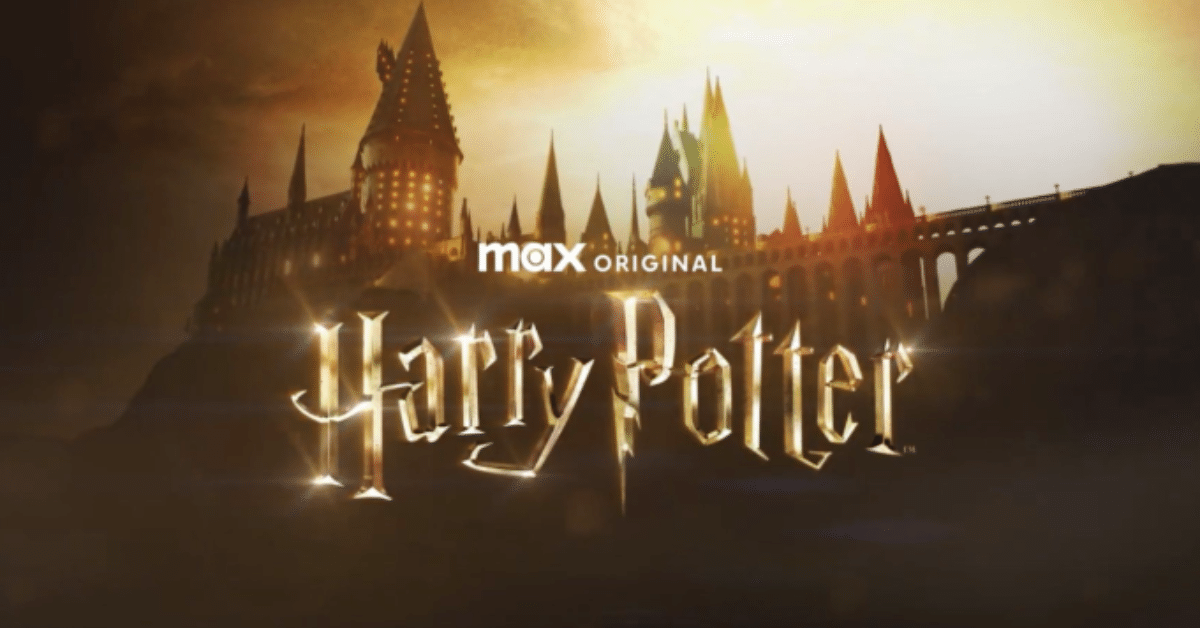
Harry Potter is a cultural phenomenon—there is no doubt about it. Following the massive global success of the eight theatrical films, it was a natural next step for Warner Bros. and HBO to develop a long-form television adaptation capable of honoring J.K. Rowling’s novels page-by-page. For years, the loudest complaint from the Wizarding World fandom was that two-hour movies simply didn’t have enough runtime to fully adapt the books, forcing painful cuts and rushed character arcs.
Cut to November 2026: HBO is just weeks away from premiering its new series on December 25, and the network recently dropped an 89-second Hogwarts feast clip featuring John Lithgow as Albus Dumbledore, Janet McTeer as Minerva McGonagall, and Dominic McLaughlin as Harry Potter. Within hours, social media timelines were flooded with backlash claiming the clip “feels less magical than the movies” and even arguing that 2001 CGI looked superior.
There is a massive irony unfolding here. While nobody knows yet whether the finished series will surpass the films, for over two decades fans begged for a project that restored beloved subplots—like Peeves, S.P.E.W., Ginny Weasley’s actual personality, and the missing halves of Goblet of Fire and Half-Blood Prince. Yet the exact moment HBO attempts to deliver a fresh, book-oriented vision, the goalposts suddenly shift.
The “Book Accuracy” Paradox (When Film Canon Replaces Book Canon)
Image via Warner Bros. Pictures
One of the funniest contradictions in the reaction to the Hogwarts banquet teaser is how viewers accused the scene of straying from the source material—when it actually leans closer to Rowling’s text in key ways than Chris Columbus’s 2001 film did:
Restoring Book Beats vs. Movie Habits
While the 89-second teaser includes a lively student chant for Dumbledore and shifts Harry’s “is he a bit mad?” question from Percy Weasley to Ron, it restores the eccentric, whimsical energy of Dumbledore’s start-of-term banquet—an eccentric side of the headmaster that the 2001 movie largely smoothed over.
Memory Confusing Movie Canon with Book Canon
Because Richard Harris, Maggie Smith, and John Williams’ score defined an entire generation’s childhood, anything that looks or sounds different triggers an immediate knee-jerk rejection—even when it aligns closer to the written page.
The Visual Design Tightrope
Critics have also complained that the show’s Hogwarts looks like a “cheaper version” of the films. Yet had HBO radically redesigned the castle, uniforms, or Great Hall, the internet would have revolted over breaking continuity with the theme parks, merchandise, and visual iconography fans hold dear. Keeping familiar architectural anchors gives returning fans a sense of home while allowing new creative elements to capture a younger generation.
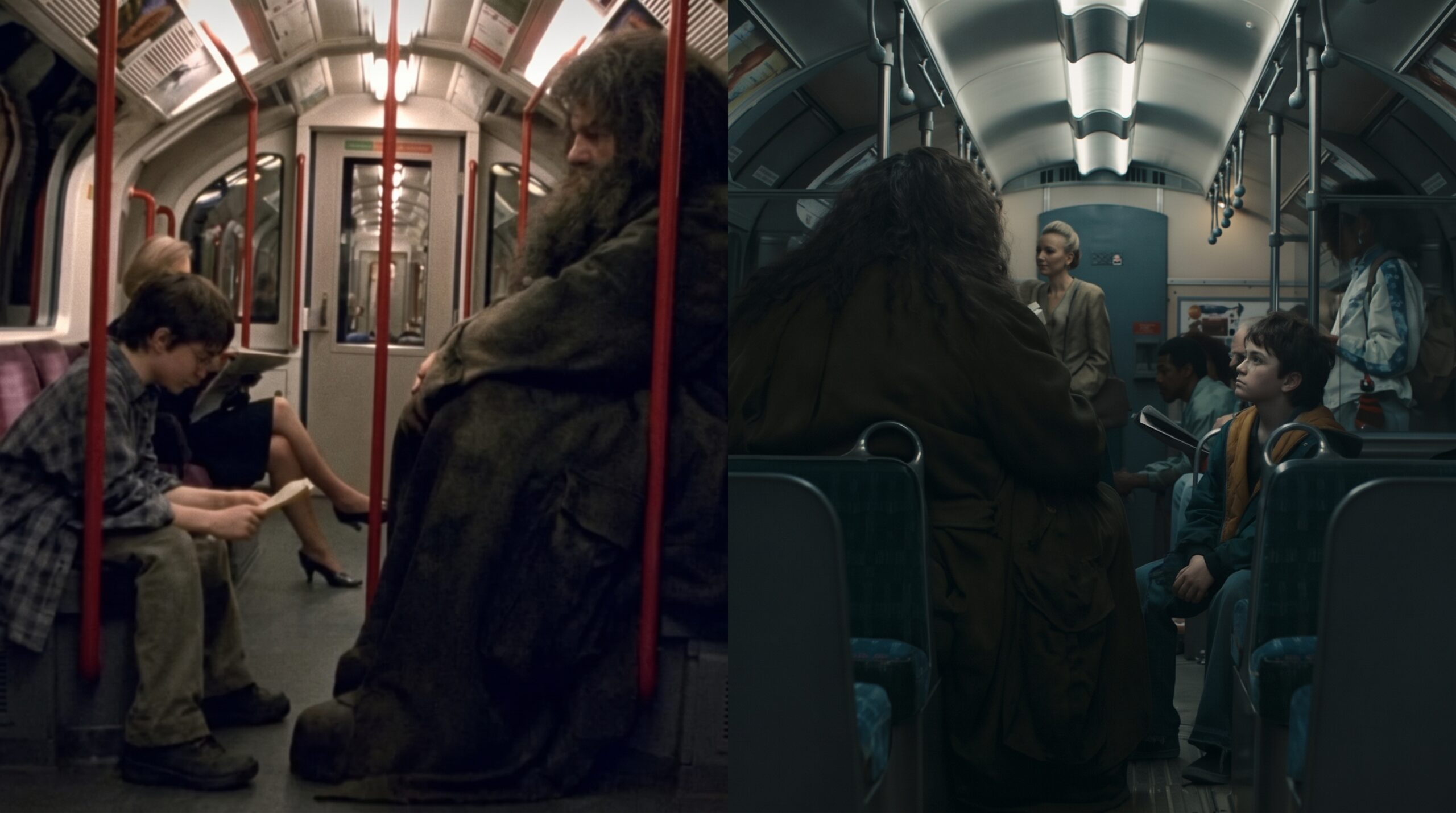
Different Eras, Different Cameras: 2001 Cinema vs. 2026 Television
Image via Warner Bros. Pictures. Bottom: Image via HBO / Max
Many viewers have pointed out that the cinematography seen in the trailers and feast clip doesn’t glow quite like The Sorcerer’s Stone (2001). That visual difference comes down to technology and medium, not a lack of effort:
The Sorcerer’s Stone was shot on warm, textured 35mm film during a completely different era of Hollywood lighting and photochemical color timing, designed specifically to project onto giant movie theater screens.
In contrast, HBO’s 2026 series is captured for modern 4K HDR prestige television, utilizing a more natural, grounded, and slightly darker tonal palette engineered to sustain an eight-episode arc—and eventually a seven-season journey—rather than a standalone two-hour holiday fairy tale. Comparing a 2026 streaming frame directly to a 2001 35mm film print isn’t a flaw; it reflects 25 years of evolution in how visual storytelling is photographed.
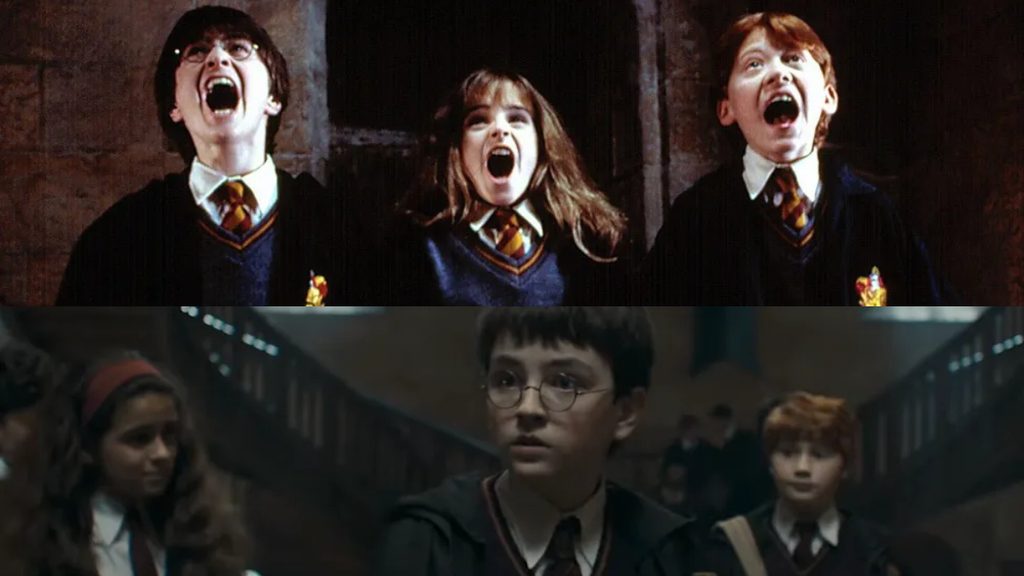
The Budget Reality: $201 Million Across 8 Hours vs. Theatrical Blockbusters
Top: Image via Warner Bros. Pictures. Bottom: Image via HBO / Max
Another viral criticism claims that for a supposedly massive-budget series, the feast clip lacks movie-level visual polish. According to UK production filings for Plum Jam Productions, HBO spent roughly $201 million on Season 1 (approximately $25.2 million per episode across eight episodes)—putting it on par with House of the Dragon and making it one of the most expensive debut seasons in television history.
However, per-minute budget math changes everything:
Production Format
Total Budget
Total Runtime
Approximate Spend Per Minute
Production Allocation Reality
Theatrical Blockbuster
$150M–$250M
~150 Minutes
$1.0M – $1.6M / min
Concentrated entirely on 2.5 hours of sets & VFX
HBO’s Harry Potter (S1)
~$201M
~480 Minutes (8 Eps)
~$418,000 / min
Spread across 8 hours + permanent Leavesden infrastructure
A significant portion of that $201 million investment went toward constructing permanent sets, schools for the young cast, and multi-season infrastructure at Warner Bros. Studios Leavesden designed to last across all seven books. Expecting theatrical blockbuster VFX density in every single minute of an eight-hour television season is simply unrealistic.
Why eagle-eared soundtrack fans are already finding reasons to be optimistic about the Wizarding World’s musical future.
The Verdict: Judging an 8-Episode Season by 89 Seconds
Ultimately, HBO’s Harry Potter could turn out to be a triumphant reinvention—or it could stumble. Nobody knows yet because not a single person outside the studio has seen a full episode ahead of its December 25, 2026 premiere.
Pulling a 89-second dialogue clip out of context and declaring an entire decade-long adaptation dead on arrival says far more about internet nostalgia culture than it does about the show itself. Once all eight episodes begin rolling out this Christmas, viewers can finally judge the pacing, character depth, and book faithfulness on their own terms.
Are fans being too harsh on HBO’s Harry Potter series before its December 25 premiere? Do you think the new Hogwarts banquet clip captures the spirit of the books, or is the shadow of the 2001 films too hard to escape? Let us know in the comments below!
Written by Paco Chanona
Paco Chanona is a filmmaker, screenwriter, and founder of Flicks n Pop. A Vancouver Film School alumnus with over 14 years in media production across Canada and Mexico, he covers film analysis, studio box office trends, and industry news.